



Physician time
Unhurried consultation, and enough of it to take a proper history and explain a plan — the single thing international patients most often report missing.
A Strategic Framework · Presented for Discussion
A strategic framework for health, longevity, international patient care, innovation and economic opportunity — proposed as a complementary layer to the national health infrastructure Egypt is already building.
Presented by
Dr. Dalal Akoury, MD
Egyptian-American Physician · Global Health Strategist
The framework asks something different of each participant. Start with the one that describes you — each opens the matching perspective further down the page.
Egypt decides. What this asks of the state, what it protects, and why nothing proceeds without Egyptian authority.
Open this perspectiveNothing proceeds unless it improves the standard of care. The safeguards, the referral standards and the teaching that would come with them.
Open this perspectiveA category, a sequence and a set of preconditions. This page is not an offer, a solicitation or a prospectus.
Open this perspectiveEgypt already holds the foundations: a national health strategy, an internationally recognised accreditation framework, a national digital health-tourism platform, and institutions already serving international patients from more than a hundred countries.
This initiative does not seek to replace what Egypt has built. It seeks to connect Egypt's strengths — to one another, and to the world.
The Strategic Question
How can Egypt turn its medical excellence into a globally connected ecosystem for health, longevity, innovation and human potential?
Six national efforts, described here from public information. They are the starting point of this framework, not its product — and none of them is connected to, or has any knowledge of, this proposal.
Health system reform, universal health insurance rollout and quality improvement sit inside Egypt's own long-term national development framework. This proposal is written to fit beneath those priorities, not beside them.
The ministry sets clinical policy, licensing and workforce planning, and publishes the national figures on medical education and the physician workforce that this page cites.
Source [03]
Egypt's tourism authorities already promote therapeutic and medical tourism as a recognised national segment, alongside the hospitality capacity, service culture and destinations that support longer visits.
The General Authority for Healthcare Accreditation and Regulation sets and applies Egypt's national healthcare accreditation standards, and has itself been accredited by the International Society for Quality in Health Care (ISQua).
Egypt's Healthcare Authority already runs a structured international-patient programme. It reported treating approximately 35,000 international patients from 124 countries in 2025, with roughly $8m in associated revenue — a 76.7% increase on the prior year.
A national digital medical-tourism platform intended to connect international patients with accredited Egyptian providers, developed with Egyptian institutional participation. Any new coordination layer should connect to it rather than duplicate it.
Source [06]
How to read this section
These are independent Egyptian national efforts, summarised from publicly available information and cited below. Their appearance on this page is descriptive only. None of the ministries, authorities, platforms or institutions named has endorsed, approved, joined, sponsored or been consulted about this framework, and no relationship with any of them exists.

Dr. Dalal Akoury was born and educated in Egypt, and has spent more than four decades practising and teaching medicine in the United States — much of it with patients whose conditions were complex, chronic and difficult to coordinate.
That work is where this framework comes from. The gap it describes is not a market observation; it is what she has watched go wrong for forty years, in the richest health systems in the world: care that is excellent in the room and incoherent everywhere else.
She is not proposing to run, own or direct any part of Egypt's health sector, and she holds no appointment, agreement or authority of any kind. What she offers is convening — bringing the right people into a room, holding the work to an international standard while it is defined, and carrying a proposal between two professional cultures without either being misrepresented to the other.
She has a potential future professional interest in work of this kind, and states it plainly rather than leaving it to be discovered.
Full role, interest and disclosureEverything below sits beyond the national infrastructure described above. Each is a coordination, relationship or capability question rather than a construction question — which is precisely why it can be tested cheaply, in one pathway, before anything is built.
Proposed scope
Formal, reciprocal relationships with physicians and institutions abroad — so that international patients arrive referred, prepared and clinically understood rather than arriving cold through a search engine.
Evidence-guided healthy-ageing, metabolic and functional assessment offered as a defined, disciplined programme with published limits — not as an open-ended promise.
Guideline-concordant screening and risk reduction, structured so that what is tested, why, and what happens with the result are all defined in advance.
A compressed, multidisciplinary assessment for senior professionals and their families — elective, schedulable, measurable, and therefore suitable as a first test of coordination.
Structured post-treatment recovery — rehabilitation, nutrition, monitoring and rest — designed clinically and delivered in settings Egypt already operates well.
Accommodation, family logistics, language support and cultural programming planned around the clinical schedule rather than sold separately from it.
Scheduled, documented contact after the patient returns home, with a plan their own physician can act on. This is where most international medical travel currently fails.
Structured participation by Egyptian clinicians, scientists and professionals abroad — as referrers, teachers, collaborators and visiting faculty.
Continuing professional education, fellowships and structured exchange, designed so that knowledge and people move in both directions.
Collaborative research in prevention, metabolic health, longevity science and health-systems design, conducted to Egyptian and international ethical standards.
The connective layer: secure records exchange, referral routing, remote consultation, follow-up scheduling and outcome tracking — built to interoperate with Egypt's national systems.
Skilled employment, foreign-currency earnings and investment in health-linked development — pursued only at a scale and pace that Egyptian institutions judge appropriate.
The figures below are published national figures, attributed and linked. The judgements that follow them are described as judgements.
CAPMAS, 2020 · all registered healthcare professionals, public and private [08]
CAPMAS, 2020 · public, university, military, private and specialist hospitals [08]
Minister of Health and Population, 2026 · new medical graduates per year [03]
Egypt Healthcare Authority, 2025 · patients treated in its own facilities during 2025 [01]
International patients from 124 countries, 2025 — This is a single-year figure for one authority's facilities, not a national total and not cumulative. Definitions of “medical tourist” differ between sources, so it should not be compared with figures published elsewhere without checking what each one counts.
Figures are reproduced as published by their sources and are not adjusted, projected or combined. Full citations appear in the Sources section at the foot of this page. Where a figure is several years old, it is labelled with its year rather than presented as current.
A large, established clinical workforce; a substantial and expanding hospital base; deep specialty depth across oncology, cardiology, orthopaedics, fertility, ophthalmology, transplantation and rehabilitation; and a national accreditation body that is itself internationally accredited.
Alongside that: a mature hospitality industry with the service culture and capacity to support longer stays, restorative settings on the Mediterranean and Red Sea, and a geography within convenient reach of Africa, the Middle East, Europe and much of Asia. These are strategic advantages rather than measured claims, and they are offered here as such.
This framework does not propose that Egypt build new hospitals, create new specialties, or reorganise its health system to serve international patients. Domestic health priorities are, and should remain, the country's first concern.
What is proposed is narrower and cheaper: a coordination, referral and follow-up layer that connects capabilities Egypt already holds, tested first in a single pathway small enough that stopping it costs almost nothing.
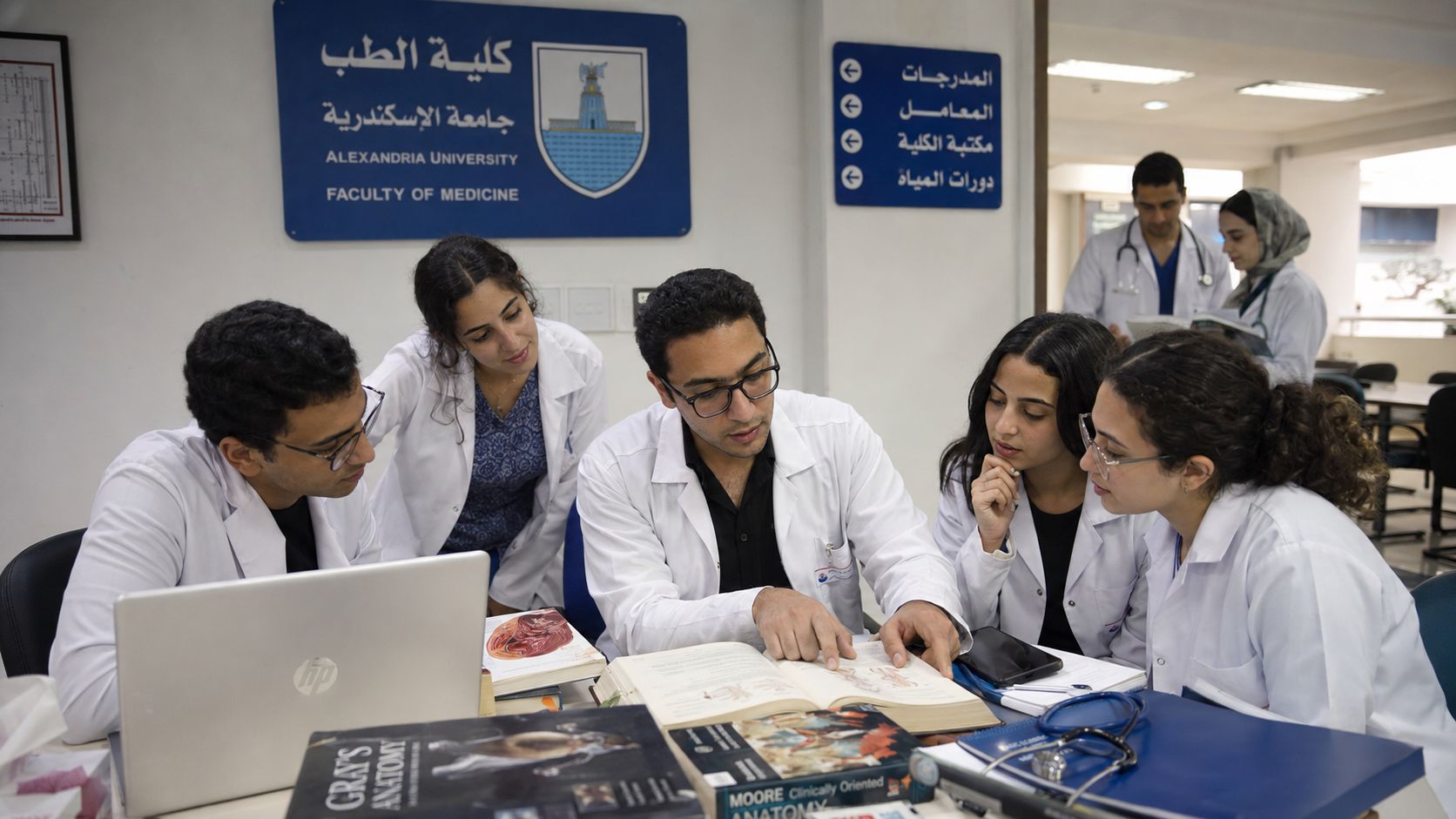
Egypt produces physicians at a scale few countries in the region match. The Minister of Health and Population has stated that Egypt currently graduates around 13,000 doctors annually, and that this figure may rise to about 22,000 as private university capacity expands.
The same public reporting shows the pressure alongside the strength: physicians working in government hospitals declined from 122,400 in 2023 to 120,400 in 2024. Egyptian clinicians are also present in senior roles across health systems in the Gulf, Europe and North America — a genuine national asset abroad, and a genuine staffing pressure at home.
What this framework does not claim
This framework does not claim to solve physician emigration or workforce shortage. Those are national policy questions of far greater scale. What it proposes is narrower: that structured international referral, teaching, research and diaspora participation may make staying in Egypt professionally more attractive at the margin. If a pilot proceeds, retention should be treated as a secondary outcome to be measured — reported honestly whether the effect is positive, negligible or absent — never as a promised result.
Competing on price is a losing position: it attracts the most price-sensitive patients, invites comparison with the cheapest market of the moment, and puts constant downward pressure on quality. The proposition here is the opposite — that Egypt can offer more of what patients actually cannot buy elsewhere.
Unhurried consultation, and enough of it to take a proper history and explain a plan — the single thing international patients most often report missing.
Tests selected deliberately and sequenced sensibly, rather than accumulated department by department.
Appointments, imaging and specialist opinions within days rather than months, without a queue that penalises the complex case.
Specialists who confer with one another about the same patient and arrive at one coherent recommendation.
A named, accountable coordinator who owns the patient's pathway end to end, in a language the patient understands.
Accommodation, recovery, family support and logistics planned around the clinical schedule — an area of established Egyptian strength.
A documented plan and scheduled follow-up that continue after the patient has flown home.
Time · Coordination · Access · Continuity
Each stage below already exists in Egypt in some form. What is proposed is to govern them as a single continuous experience, with one party accountable for the whole of it.
Case review by an Egyptian clinician before travel, correct test selection, specialist matching, honest cost and timeline expectations, records transferred in advance, visa and travel coordination.
Precision diagnostics, specialists who confer with one another, interpretation delivered in the patient's own language, and one named coordinator accountable throughout.
Structured rehabilitation, nutrition, monitoring and rest in settings designed for restoration, with the accompanying family supported alongside the patient.
Complete records transferred to the patient's own physician in a usable form, a written plan that physician can act on, and scheduled follow-up contact at defined intervals.
Why the fourth stage matters most
International medical travel most commonly fails after the patient goes home: records that never arrive in usable form, no continuity with the home physician, complications managed by someone who was not part of the original decision, and no way to know whether the treatment actually worked. Continuity after return is therefore treated here as one of the framework's principal differentiators and as a measured outcome of any pilot — not as an optional courtesy at the end.
Used loosely, the phrase is branding. Used precisely, it is a list of things that can be built, staffed, funded and measured. Nine of them are set out below.

Structured training in international patient care, coordination, communication and quality methods — skills that are learnable, teachable and currently in short supply everywhere.
Professional roles, teaching opportunities and research participation that give clinicians reasons to build careers in Egypt. Measured as an outcome, never promised as a result.
Defined roles for Egyptian clinicians and scientists abroad — referral partners, visiting faculty, research collaborators, second-opinion contributors.
Collaborative studies in prevention, metabolic health, longevity and health-systems design, with Egyptian investigators as principals rather than as sites.
Continuing medical education, fellowships and exchange programmes with international faculty teaching in Egypt and Egyptian faculty teaching abroad.
Practical quality-management capability aligned with national accreditation requirements — the unglamorous discipline that makes everything else defensible.
Secure, standards-based exchange of medical records between participating institutions, national systems and the patient's own physician abroad.
A trained, accountable coordination profession — currently informal almost everywhere, and one of the clearest opportunities to lead rather than follow.
Defined metrics, honest reporting and published results, including results that are disappointing. Without this, none of the above can be assessed at all.
Confusion about what exists and what does not is the fastest way to lose institutional credibility. Every component is therefore placed in one of three explicit categories.
These components would connect to Egyptian national infrastructure rather than replace or duplicate it. Any such connection would require the agreement of the relevant Egyptian authority — none has been sought or given.
None of these exists today. Each is a proposal to be designed, costed, approved and tested — first at the smallest scale that can produce a real answer.
Nothing in this layer should be designed, promoted, financed or announced until a pilot has produced measured results and the appropriate Egyptian authorities have approved proceeding.
Status of every component above
Every component on this page is proposed for discussion. None is an existing programme, agreement, partnership, licence, entity or institutional commitment, and nothing here should be read as suggesting otherwise. Each would have to be defined, scoped, costed and approved with the appropriate Egyptian authorities, institutions and clinical leadership before any design, announcement, financing or clinical activity of any kind.
The first pathway is chosen for what it can teach, not for what it can earn. If the coordination works there, it can be extended. If it does not, very little has been risked.
Executive health is proposed as the first pathway because it is elective, lower-acuity than many complex treatment pathways, comparatively measurable, multidisciplinary, and suitable for testing navigation, coordination, informed consent, records exchange, follow-up and patient experience before considering higher-complexity pathways.
It also fails safely. An elective assessment that is poorly coordinated produces a disappointed visitor and a clear list of things to fix. The same coordination failure inside a complex surgical or oncological pathway is a different order of problem entirely — which is exactly why the coordination should be proven somewhere else first.
An executive-health pathway is only defensible if it is disciplined about what it tests and why. The following would be built in from the start, not added later:
These are the reasons international health initiatives fail. Each is paired here with the response a pilot would have to design in advance, and with how it would be measured.
Participation restricted to institutions meeting published, nationally-recognised accreditation criteria, with criteria applied consistently and reviewable by participants.
Proportion of pathway volume delivered by accredited institutions; complaint and adverse-event rates by institution.
Written allocation of clinical and legal responsibility between the referring physician abroad, the Egyptian institution and any coordinating party, reviewed under Egyptian law before any patient is accepted.
Signed liability framework in place before first patient; number of disputes and time to resolution.
Transparent, itemised pricing agreed in advance; explicit statement of what international insurers will and will not reimburse; no ambiguity about who pays for complications.
Variance between quoted and final cost; proportion of patients with unexpected charges.
Consent documents and clinical discussions delivered in the patient's own language by qualified medical interpreters, with comprehension confirmed and documented rather than assumed.
Proportion of consents taken in the patient's first language; documented comprehension checks; patient-reported understanding.
Guideline-concordant testing only, pre-test counselling on incidental findings, and a defined follow-up pathway for every abnormal result agreed before the programme opens.
Rate of incidental findings; proportion resolved to a documented endpoint; audit of downstream investigation volume.
Structured, standards-based records exchange with the patient's own physician, conforming to Egyptian national systems and data-protection requirements.
Proportion of patients whose complete records reach their home physician in usable form within a defined window.
Scheduled follow-up contact at defined intervals, with a written plan the home physician can act on, and a named party accountable for making the contact happen.
Follow-up completion rate at 30, 90 and 365 days; proportion of home physicians who confirm receipt of a usable plan.
Conservative claims, published limits, no guaranteed outcomes, and an agreed protocol for handling adverse events and complaints openly rather than defensively.
Independent review of all published material; adverse-event disclosure rate; time from complaint to substantive response.
Volume caps set by the participating Egyptian institutions themselves, with capacity effects evaluated by those institutions and monitored throughout.
Domestic waiting times, theatre and clinic utilisation, and domestic access measures tracked before, during and after the pilot.
Named responsibility for each component, defined decision rights, disclosed commercial relationships, and a written stopping rule agreed before the pilot begins.
Governance framework documented and published; adherence reviewed at each phase gate.
Before anything is designed, financed or announced, the sensible first move is a short, disciplined assessment by a small group of the right people, hosted by an appropriate Egyptian institution.
A working council of approximately ten to fifteen participants drawn from Egyptian government, medicine, academia, hospitality, development and technology — small enough to reach conclusions, senior enough for those conclusions to be useful.
It would convene for a defined ninety-day period with a fixed agenda and a written output: an assessment of what Egypt can credibly offer today, what would need to be added, what the risks are, and whether a single pilot pathway is worth designing at all.
Map what genuinely exists today — clinical, accreditation, hospitality, digital and regulatory — at what standard, and where, working from Egyptian institutional sources.
Identify the regulatory, licensing, liability, insurance and data-protection requirements any international patient pathway would have to satisfy under Egyptian law.
Determine whether a complementary coordination layer is actually needed, or whether existing national infrastructure already covers the gap.
If it is needed, design one pathway end to end — from referral abroad through assessment, treatment where applicable, recovery and long-term follow-up.
Define patient-safety, consent, navigation, records and follow-up standards, and the domestic-capacity safeguards that would apply.
Define the outcome measures, the reporting commitments and the explicit stopping rule under which the pilot would be halted.
Produce a written recommendation to the host institution: stop, refine, or proceed to a bounded pilot.
Funding and administration of any 90-day assessment
Funding, administrative support and secretariat arrangements for any 90-Day assessment would be established transparently with the prospective Egyptian host before commencement. No funding arrangement is established by this proposal. No sponsor, donor, budget or financial commitment exists, is implied, or is being sought through this page.
The council's output is a recommendation to its Egyptian host, which decides. Three outcomes are available, and each is a legitimate result.
The assessment concludes that the complementary layer is not needed, not feasible, not appropriate at this time, or better delivered by existing national institutions. The work ends and the findings are documented honestly. This is a successful outcome, not a failure.
The concept has merit but the design, scope, governance, safeguards or partners are not yet right. The framework is revised and reassessed before any pilot is authorised.
A single, bounded, capped pilot pathway is authorised by the appropriate Egyptian authorities, with published outcome measures, a defined duration and an agreed stopping rule.
Why “scale” is not a Day-90 option
Scaling is not available as a Day-90 decision, and this page does not present it as one. Any expansion beyond a single bounded pilot could only be considered after that pilot has run, after its measured outcomes have been reviewed by the participating Egyptian institutions, and after the relevant Egyptian regulatory and clinical authorities have separately approved proceeding. The sequence is: assessment → pilot → measured evidence → approvals → and only then any question of scale.
A proposal of this kind earns the right to be taken seriously only if the constraints are stated before the opportunity is. These are the commitments that would frame every stage.
Egypt determines its own health policy, priorities and partners. Nothing proposed here seeks, assumes or implies any authority over Egyptian decisions, and no external party would hold any.
All activity would be conducted under Egyptian law, with legal review completed before any clinical, commercial or contractual step is taken.
All clinical care would be delivered by clinicians licensed to practise in Egypt, within their scope of practice, under Egyptian professional regulation.
Clinical oversight, credentialling, morbidity review and incident management would sit with Egyptian institutions and Egyptian clinical leadership.
No pathway or component proceeds unless patient safety is designed in from the outset, independently reviewable, and backed by a stopping rule agreed in advance.
Clinical content grounded in evidence. Integrative, functional and regenerative approaches positioned as complementary to — never a replacement for — conventional medical care.
Institutional participation conditional on meeting published, nationally-recognised accreditation standards, applied consistently and open to review.
Published participation criteria, published outcome measures, and published results — including results that are disappointing or that lead to the work being stopped.
Patient data handled to Egyptian and international standards of privacy, security, consent and cross-border transfer, with no secondary use without explicit consent.
Referral and navigation decisions made on clinical grounds alone. Any commercial relationship that could influence a referral disclosed to the patient rather than concealed.
Named responsibility for each component, defined decision rights, disclosed interests, and measurable outcomes reviewed at each phase gate.
Any pilot should be designed to avoid material displacement of care for Egyptian patients. Capacity effects should be evaluated by participating Egyptian institutions and monitored as part of the pilot's performance framework.
Dr. Dalal Akoury was born and educated in Egypt and has spent more than four decades in medicine — in clinical practice, in medical education, and in the care of patients with complex and chronic conditions. She is the founder of AWAREmed, a physician-led practice in the United States, and an international educator, author and speaker.
She is proposing this framework because she believes the specific gap it describes — international referral, coordination and long-term follow-up — is real, is unsolved in most markets, and is one that Egypt is unusually well placed to address using capabilities it already has.
She is not proposing to run, own or direct any part of Egypt's health sector. What she offers is convening: the ability to bring people into a room, to hold the work to an international standard while it is being defined, and to carry a proposal between two professional cultures without either one being misrepresented to the other.
“I did not come home to build another clinic. I came home to ask a narrow question carefully, and to accept the answer Egypt gives.”
Dr. Dalal Akoury, MDEgyptian-American Physician · Global Health Strategist
Role, interest and disclosure
Dr. Akoury holds no governmental appointment, no ownership, no compensation, no equity, no exclusivity and no formal partnership in connection with this framework. No agreement of any kind exists with any Egyptian ministry, authority, institution, hospital, company or individual. Her role at present is limited to authoring and presenting this proposal.
She has a potential future professional interest in work of this kind, and states it here rather than leaving it to be discovered. Any future professional or commercial role would require transparent negotiation, due diligence, independent legal review, appropriate governance and conflict-of-interest management, Egyptian regulatory approval where applicable, and a written agreement — none of which exists, is under discussion, or is created by this page.
International business convening
Dr. Akoury's international professional network includes JT Foxx, a business coach and event organiser who convenes international entrepreneurs and executives. Any involvement would be limited to introductions and convening at the business level. He holds no clinical, governmental, regulatory or decision-making role in this framework; no partnership, investment commitment or Egyptian institutional relationship is stated or implied; and nothing on this page should be read as a promotion of any programme, event or commercial offering.
A framework of this kind is only worth examining if every participant can see what it asks of them and what it offers in return. Select a perspective.
Presented to national and institutional leadership for consideration. Nothing here asks Egypt to commit to anything, and nothing here would proceed without Egyptian authority.
Offered to Egypt's physicians and scientific leadership for examination — the coordination problem it describes, the safeguards it proposes, and the question of whether one carefully designed pathway is worth building at all.
Health travel changes the economics of a visit: longer stays, off-season demand, an accompanying family, and services Egyptian hospitality already delivers exceptionally well.
This page is not an offer, a solicitation or a prospectus, and nothing on it should be read as one. It describes a category and a sequence — nothing more.
For physicians, institutions, insurers and coordinators abroad who would be asked to send patients to Egypt — and who carry the reputational consequence if it goes badly.
Egyptian clinicians, scientists and professionals abroad are among the country's most valuable assets. Goodwill alone has never been enough — what has been missing is a structure through which to contribute.
For government bodies, health authorities, hospitals and clinical institutions, universities and research centres, tourism and hospitality leadership, developers, family offices and international partners considering whether this framework merits examination.
Every enquiry is read personally by Dr. Akoury's office and answered directly. Correspondence is treated as confidential and is not circulated further without your agreement. Enquiries from government bodies and public institutions are reviewed manually and are never added to any mailing list, marketing sequence, event promotion or investment communication of any kind.
Every enquiry is read personally by Dr. Akoury's office. Correspondence is treated as confidential and is not circulated further without your agreement.
Enquiries from government bodies and public institutions are reviewed manually and answered directly. They are never added to any mailing list, marketing sequence, event promotion or investment communication of any kind.
Dr. Akoury's office will review your message personally and respond directly. Correspondence of this kind is treated as confidential.
If your matter is time-sensitive, you may also write to vip@drdalalakoury.com.
Figures are reproduced as published. Where a source is several years old, the year is stated rather than the figure being presented as current.
Institutional names appear here as sources of published information only. Their inclusion does not indicate any relationship with, knowledge of, or endorsement of this framework.